If you just found a dark patch on the bathroom ceiling or along the shower grout and you’re standing there with your phone out, here’s the short version: for mold tied to an active or past leak in a Henderson bathroom, call Life Savers Restoration LLC at (702) 845-1325. The company is an IICRC Certified Firm with AMRT-certified mold technicians and answers calls 24/7, which matters because mold problems rarely wait for business hours. Not every bathroom spot needs a specialist, though, and knowing which kind you’re looking at saves you money and a wasted service call.
Surface mildew or real mold: what’s the difference?
Surface mildew is a thin, flat, usually gray or black film sitting on top of grout, caulk, or a painted ceiling where steam condenses; it wipes off a glass surface easily and comes back only if humidity stays high. Mold growing INTO a porous material (drywall, wood trim, the paper backing on drywall) looks fuzzy or raised, often has a musty smell that doesn’t go away with cleaning, and tends to spread in a pattern that follows a water source rather than just a steam pattern.
A quick test: wipe the spot with a damp cloth and a little dish soap. If it comes off cleanly and the surface underneath looks undamaged, that’s surface mildew, a ventilation and cleaning issue. If it smears, stains the cloth dark, or the drywall underneath feels soft or discolored, you’re past a cleaning problem.
When does bathroom mold mean a hidden leak?
Bathroom mold means a hidden leak when it keeps coming back in the same spot, appears below or around a toilet, tub, or shower that’s used daily, or shows up on a wall that doesn’t get direct steam exposure. Those patterns point to water getting into the wall cavity or subfloor, not just condensation on the surface.
Other tells: a soft or spongy spot on the floor near the toilet base, tile that’s come loose or sounds hollow when tapped, a water stain on the ceiling of the room below, or a musty smell that’s strongest near a specific wall rather than throughout the room. Henderson’s older stucco-and-drywall construction, common in neighborhoods like Anthem and Green Valley, doesn’t forgive a slow shower pan leak the way some builds do: water tends to travel along the subfloor before it ever shows on the surface, so by the time you see a stain, the leak has usually been active for weeks.
Plumber, handyman, or mold remediation company: who do you call first?
Call a plumber first only if water is actively running or you can see the active source (a dripping supply line, a leaking wax ring). Call a mold remediation company when the leak has stopped but mold has already grown, or when you don’t know the source and need it found before anyone touches a wall.
A handyman can patch drywall, but patching over mold without removing the contaminated material and drying the cavity first just seals the problem behind new paint. If the area is more than roughly 10 square feet, the EPA recommends professional remediation rather than a DIY cleanup, since mold growing across that much surface usually means the moisture problem driving it hasn’t been addressed either. When a leak caused the damage, a remediation crew that also handles the water damage side of the job, rather than two separate contractors pointing fingers at each other, keeps the repair coordinated start to finish.
What does a mold inspection in a Henderson bathroom actually involve?
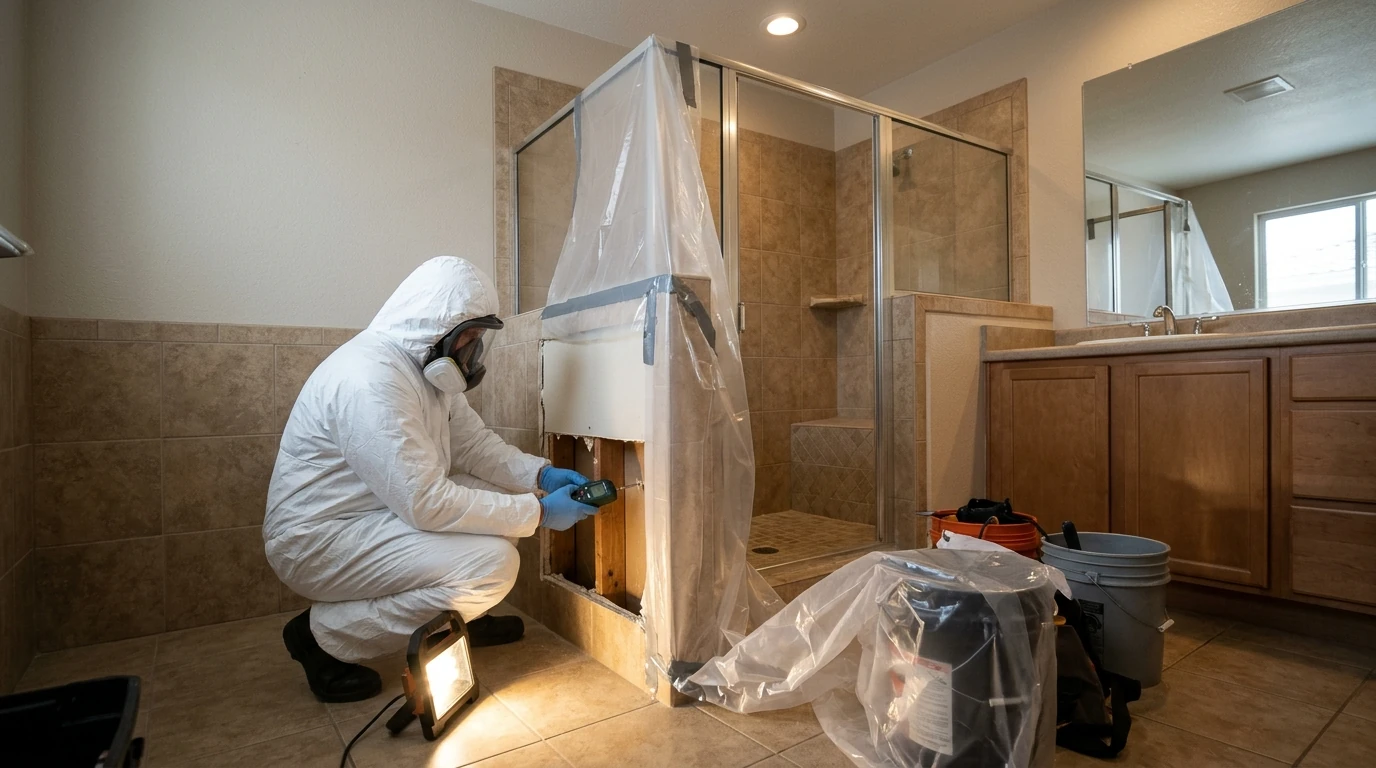
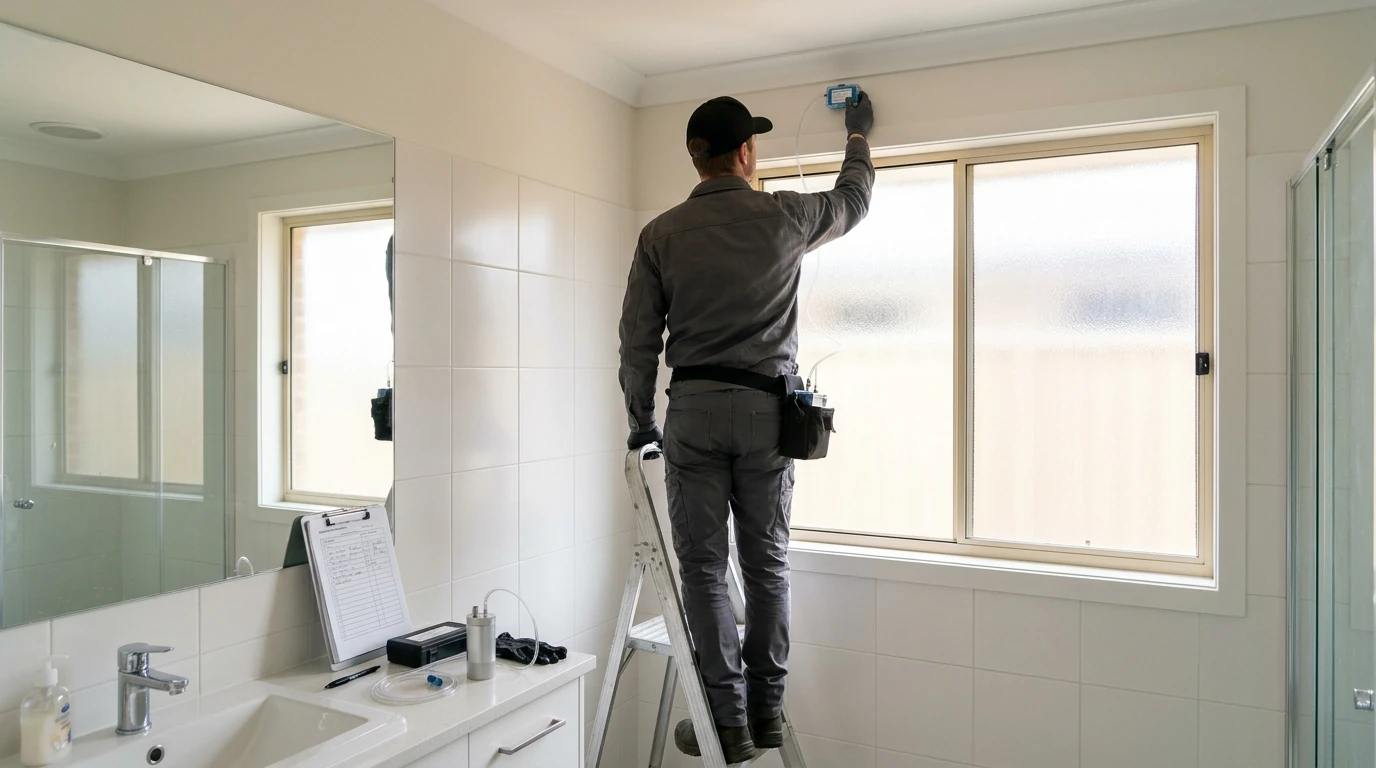
A mold inspection starts with a visual assessment and a moisture reading, not a demolition. A technician uses a moisture meter to check drywall, subfloor, and cabinetry around the fixture, looks for the leak source, and may run an air sampling pump or take a surface swab if the visible growth pattern doesn’t clearly match a known leak.
If moisture turns up inside the wall cavity, expect a small inspection opening to confirm how far it’s traveled before any remediation plan is written. That written scope should spell out what gets removed (affected drywall, insulation, sometimes cabinetry), how containment will be set up, and what drying equipment runs afterward. Mold inspection and testing is worth doing separately from remediation when you want an unbiased read before committing to removal work, especially if you’re negotiating repairs as part of a home sale.
What should you do before the remediation team arrives?
Before anyone arrives, stop using the fixture, shut off the water supply to it if you can safely reach the valve, and leave the area alone. Don’t run a fan directly on visible mold, since that spreads spores into the rest of the house, and don’t scrub it with bleach: bleach doesn’t reach mold growing inside porous drywall or wood and can mask the extent of the problem from an inspector.
Take a few photos for your records, note when you first noticed the smell or spot, and keep kids and pets out of the bathroom until it’s assessed. If the mold followed a known plumbing failure, your homeowners policy may cover the water damage portion of the repair, though most policies exclude damage from a leak that went unnoticed for a long time; a company that handles both mold remediation and water damage restoration can document the timeline for your adjuster. For more on telling species apart once an inspector identifies what’s growing, see Black Mold vs Regular Mold.
A bathroom mold patch that keeps coming back is a moisture problem first and a mold problem second. Getting both handled in one visit, instead of guessing at the source yourself, is usually the faster and cheaper path.
About Life Savers Restoration LLC
Life Savers Restoration LLC is an IICRC Certified Firm serving Henderson, NV since 2019, licensed under Nevada contractor license #0091001. Its technicians hold IICRC AMRT mold remediation certification along with water damage and fire restoration credentials, and the company handles mold remediation, mold inspection and testing, water damage restoration, and related cleanup across the Las Vegas valley.
Video Transcript
Found a dark patch on your bathroom ceiling or shower grout? Before you panic, let’s figure out exactly what you’re dealing with. Surface mildew sits on top of grout or paint, wiping away easily with soap and water, caused simply by steam and humidity. Real mold grows into drywall or wood, looking fuzzy or raised, smelling musty, and spreading in a pattern that follows water, not steam. If the stain keeps returning, sits near a toilet or shower, or appears on a wall with no steam exposure, you likely have a hidden leak. In Henderson’s stucco homes, water often travels along the subfloor for weeks before any stain ever shows on the surface. Call a plumber if water is actively leaking right now. Call a mold remediation company once the leak has stopped but mold remains. A handyman can patch drywall, but covering mold without removing it just seals the problem behind fresh paint. A real inspection starts with a moisture meter, not demolition, checking drywall, subfloor, and cabinetry to find the source. Before help arrives, shut off the water, leave the area alone, skip the bleach and fans, and snap a few photos for your records. A recurring bathroom mold patch is a moisture problem first. Call Life Savers Restoration LLC at (702) 845-1325 to schedule an assessment.